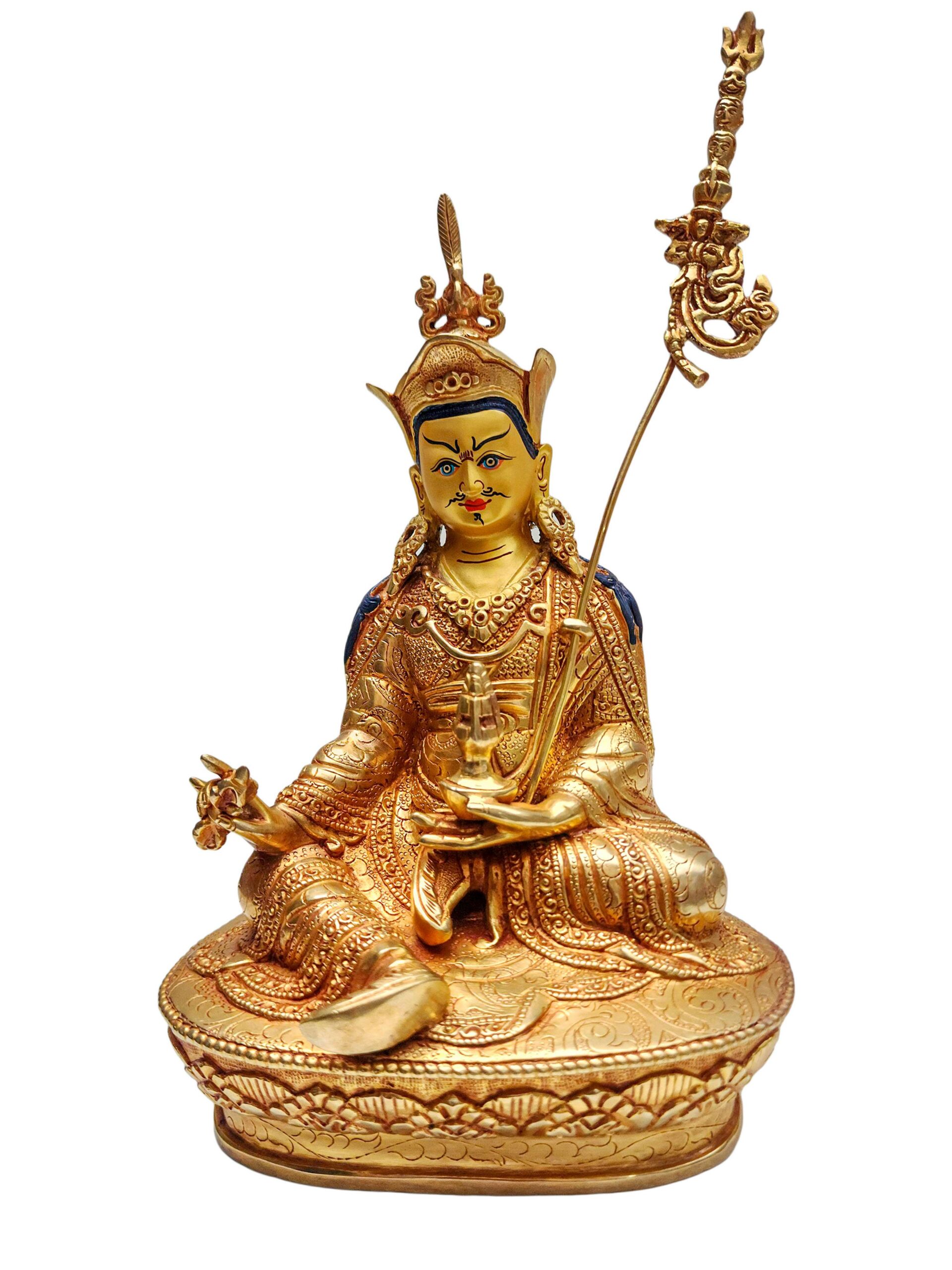
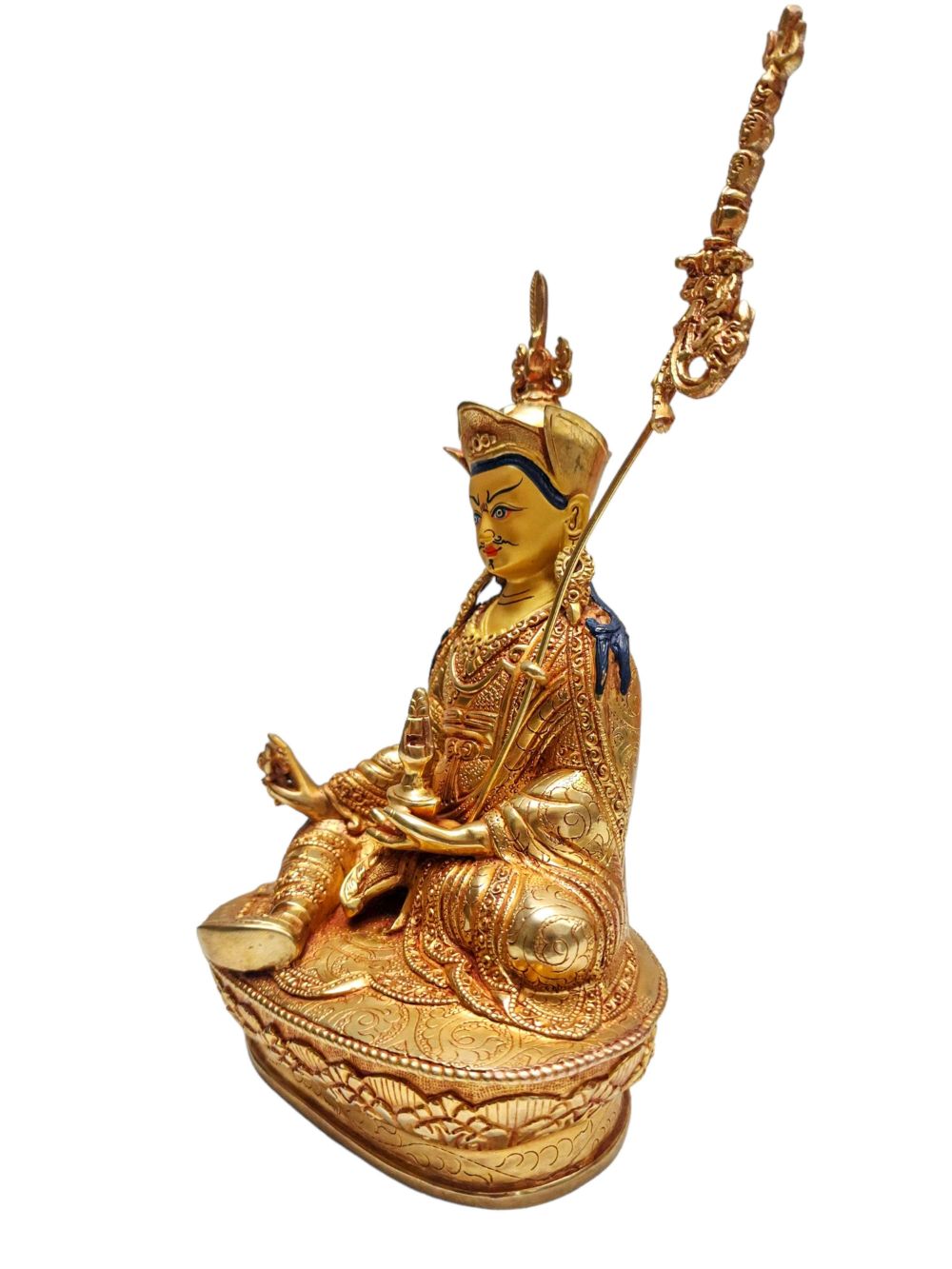
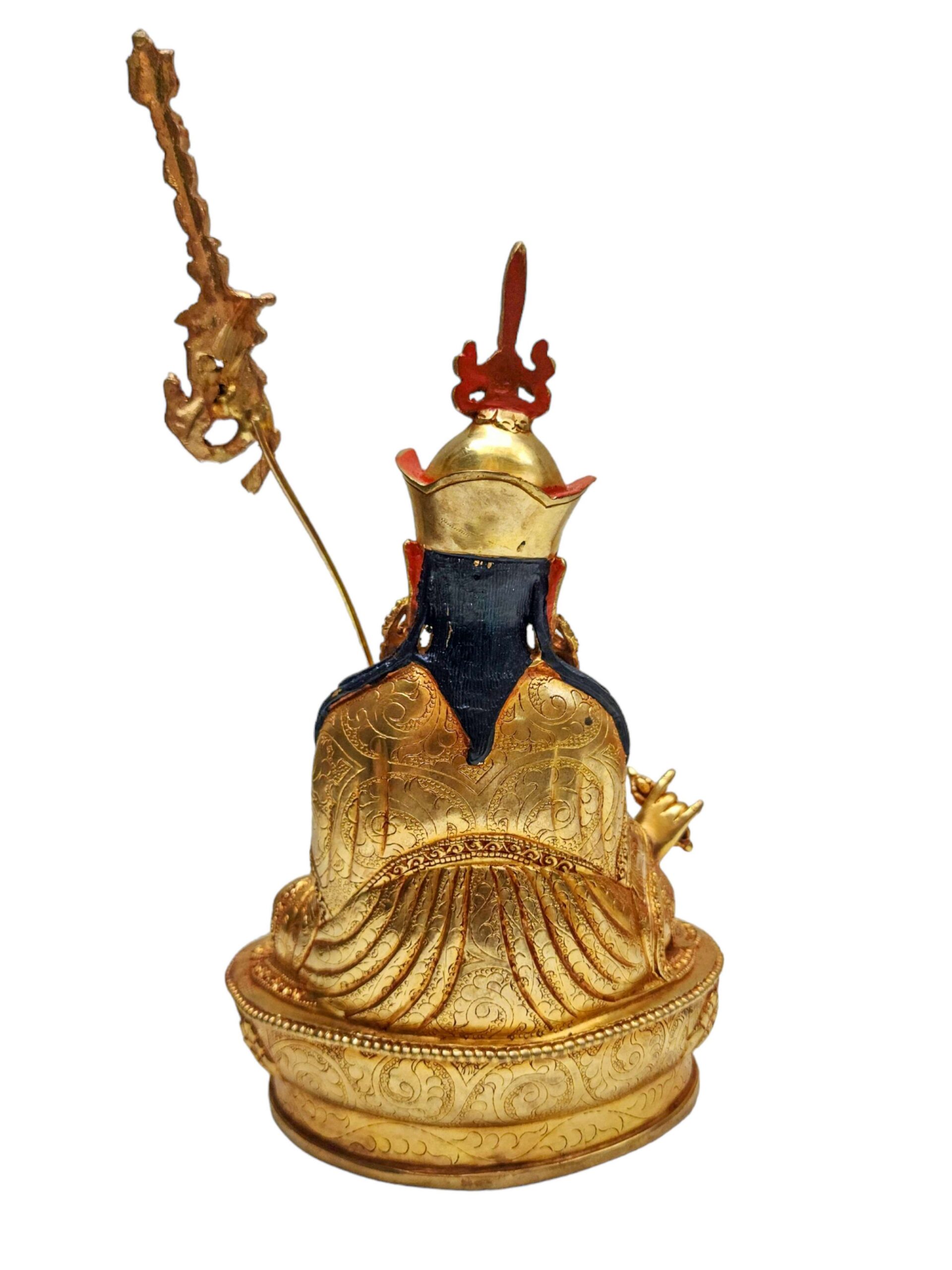


Padmasambhava Statue | Buddhist Handmade | Gold Plated with Painted Face
Item Code: HME30779
Weight: 1374 grams
Size (cm): 23 x 15 x 10
Material: Copper
Availability: Available
About Padmasambhava
Padmasambhava, also known as Guru Rinpoche (Precious Guru), was an 8th-century master who played a vital role in spreading Vajrayana Buddhism to Tibet, Bhutan, and surrounding regions. He is revered by the Nyingma tradition as the Second Buddha.
The name Padmasambhava means “Lotus-Born,” symbolizing his miraculous birth and spiritual purity. A great teacher, scholar, and mystic, he is known for his transformative teachings that transcend duality. One of his well-known statements is:
“My father is the intrinsic awareness, Samantabhadra. My mother is the ultimate sphere of reality, Samantabhadri. I belong to the caste of non-duality in the sphere of awareness…”
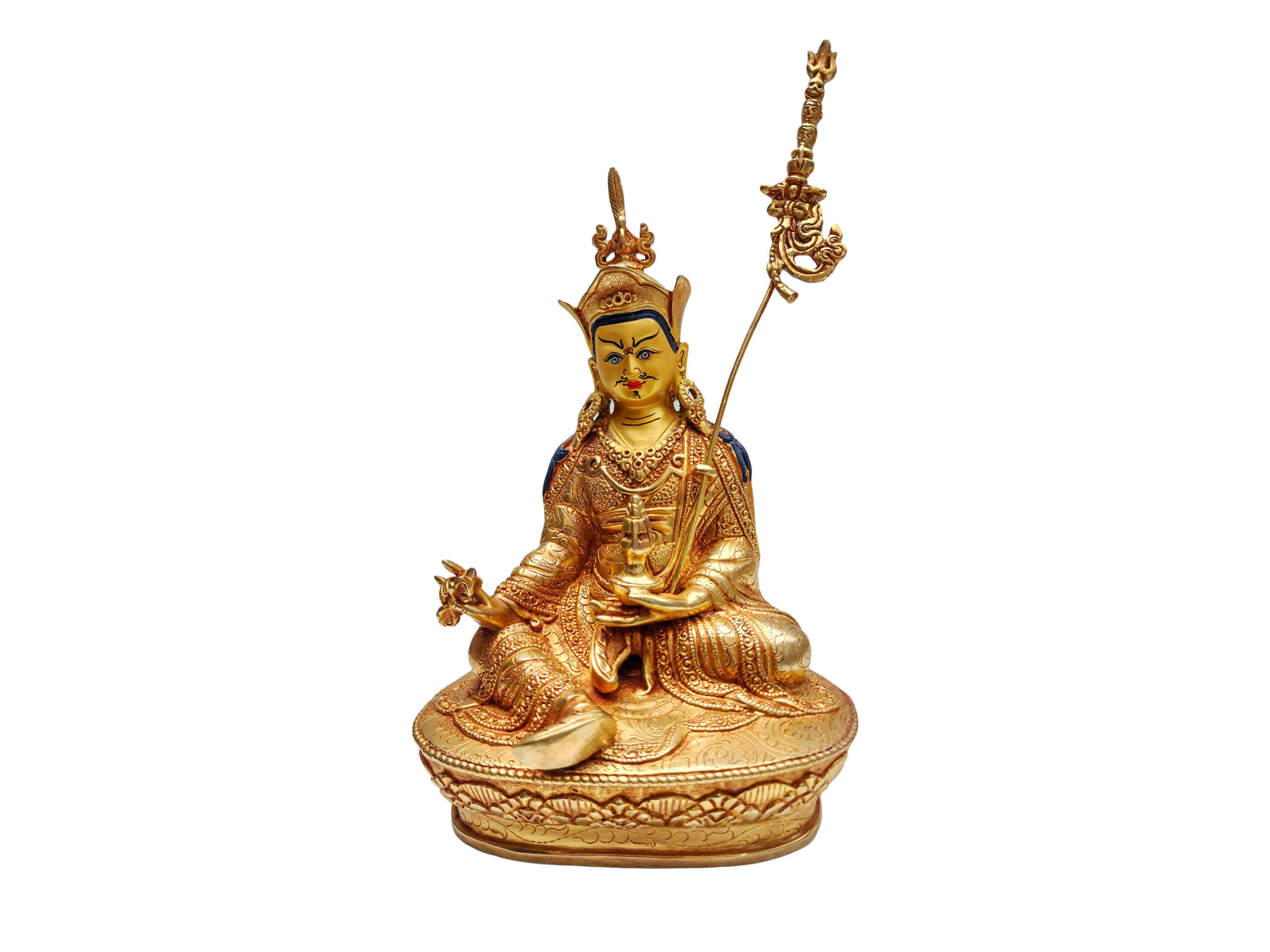
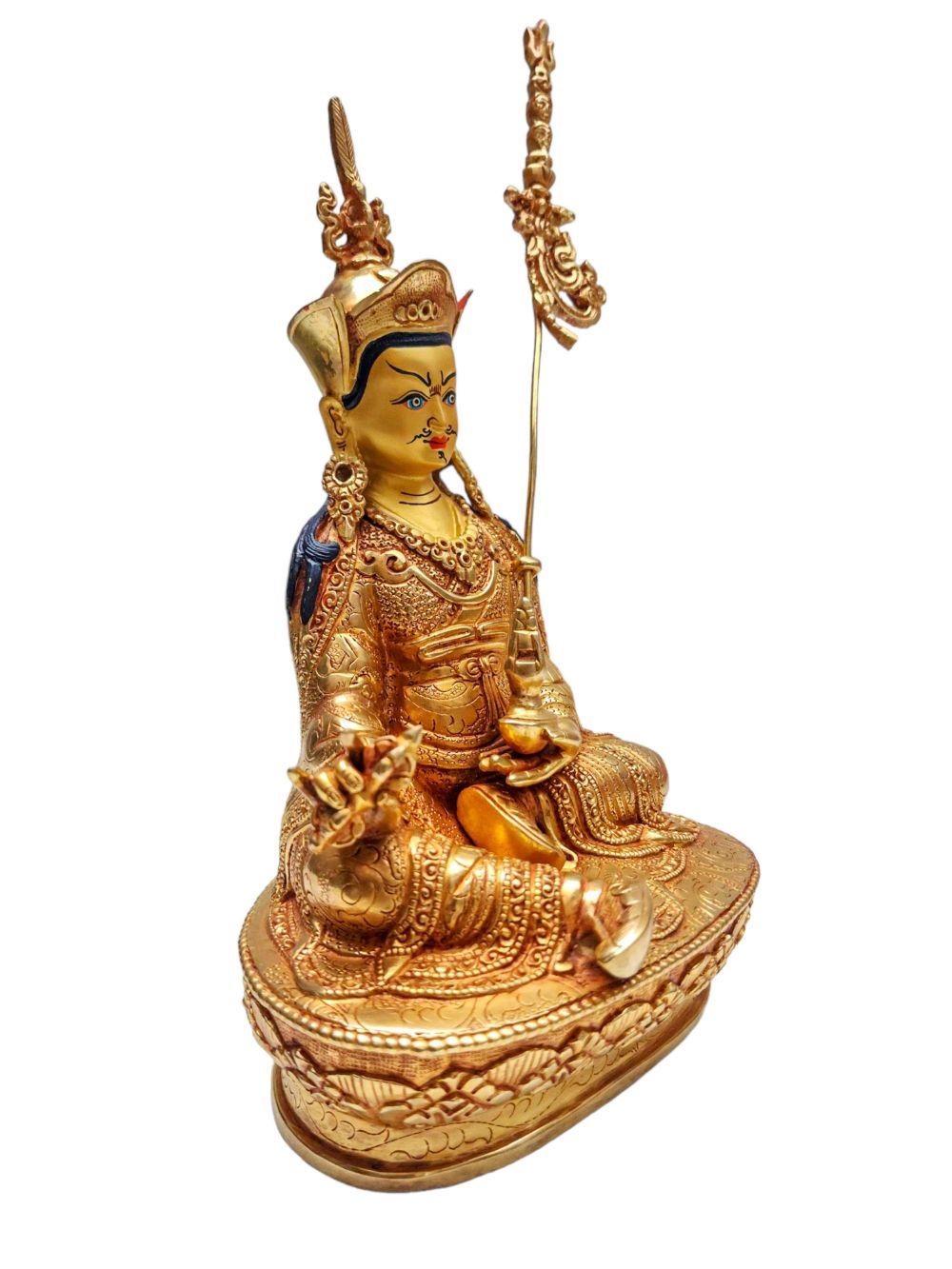
This statue reflects his profound presence with intricate artistic detail.
Gold Painted Face
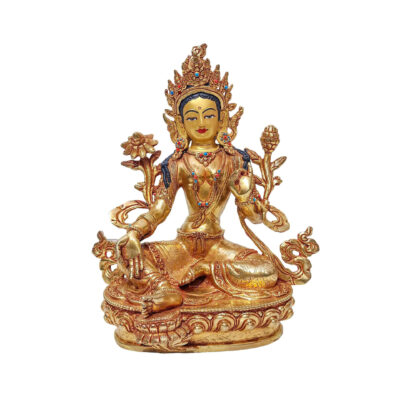
The face of the statue is delicately painted with gold, emphasizing expressive details such as the eyes and lips. This process is essential in Buddhist art, bringing the statue to life in a spiritual and visual sense.
Gold face painting is more than decorative—it signifies a sacred ritual. It prepares the statue for use in consecration, meditation, or display by imbuing it with vitality, reverence, and precision.
Full Fire Gold Plating
This statue is fully gold-plated using the traditional mercury gilding technique, also known as fire gold plating. This method involves applying a real layer of gold through a careful heating process.
Unlike modern electroplating, fire gilding is regarded as the authentic and durable method in Nepalese art. Its natural brilliance, depth, and durability make it highly valued among collectors and practitioners.
Lost-Wax Casting Method
Crafted using the lost-wax process, this statue undergoes a precise and labor-intensive technique that has been used for centuries in metal sculpture:
A wax model is hand-sculpted in fine detail.
It is encased in multiple layers of ceramic to create a mold.
The wax is melted and drained, leaving a cavity.
Molten copper is poured into the mold.
After cooling, the ceramic shell is removed to reveal the final form.
This process results in a highly detailed and unique statue, reflecting the craftsmanship and spiritual dedication of Nepalese artisans.