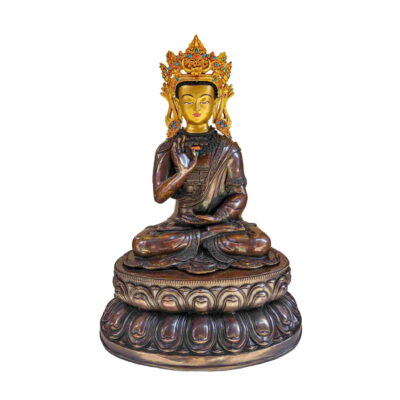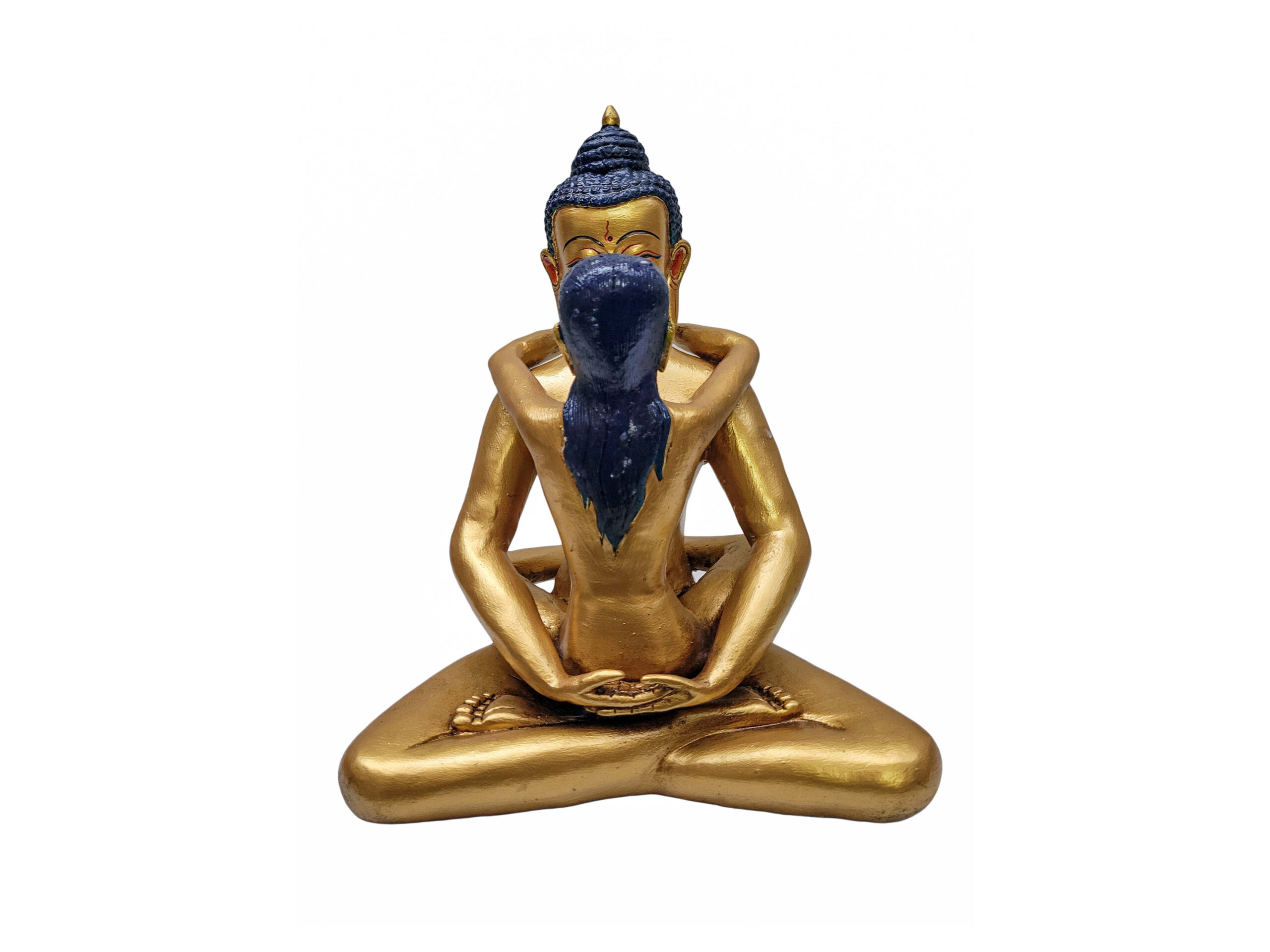
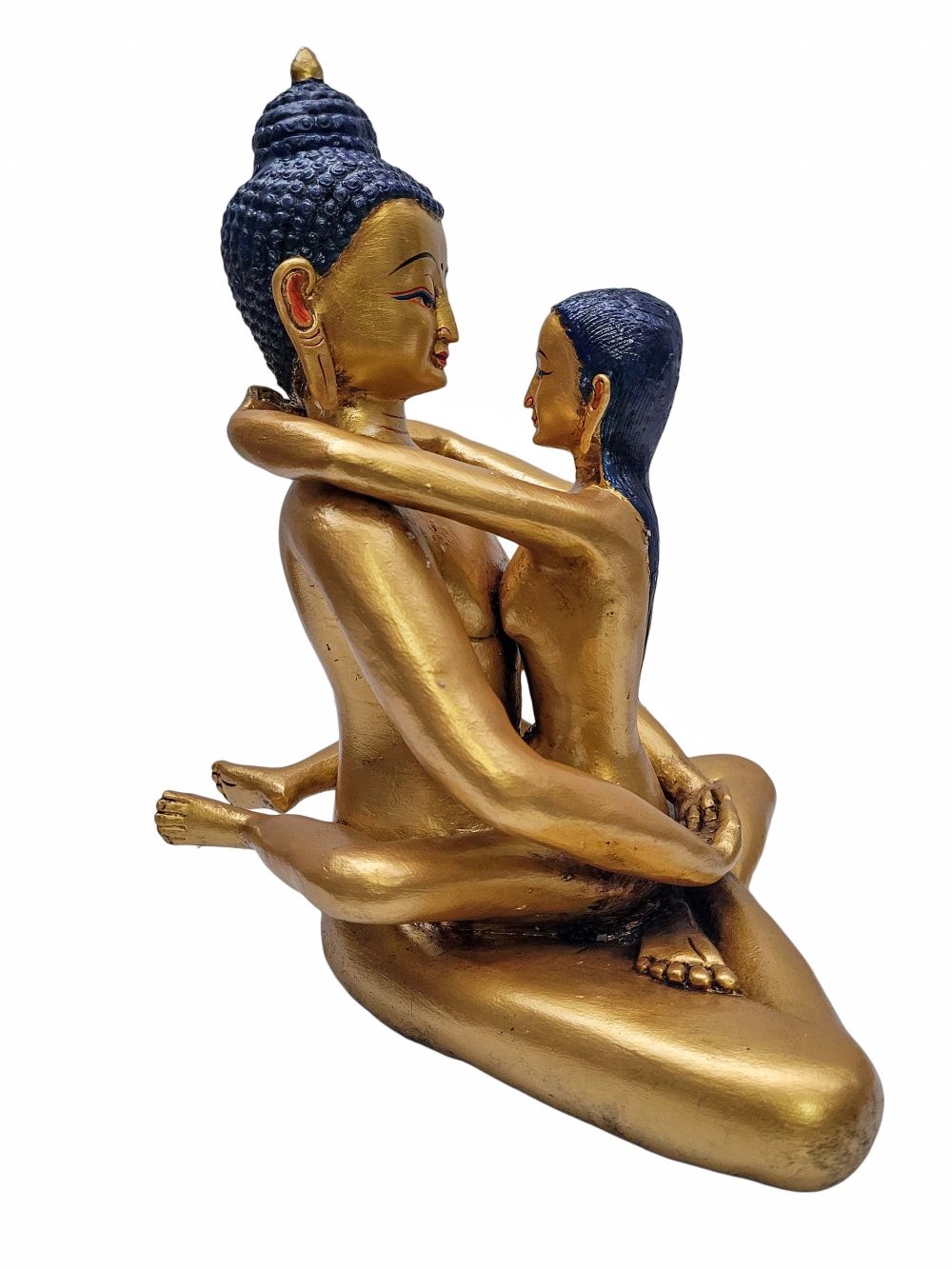
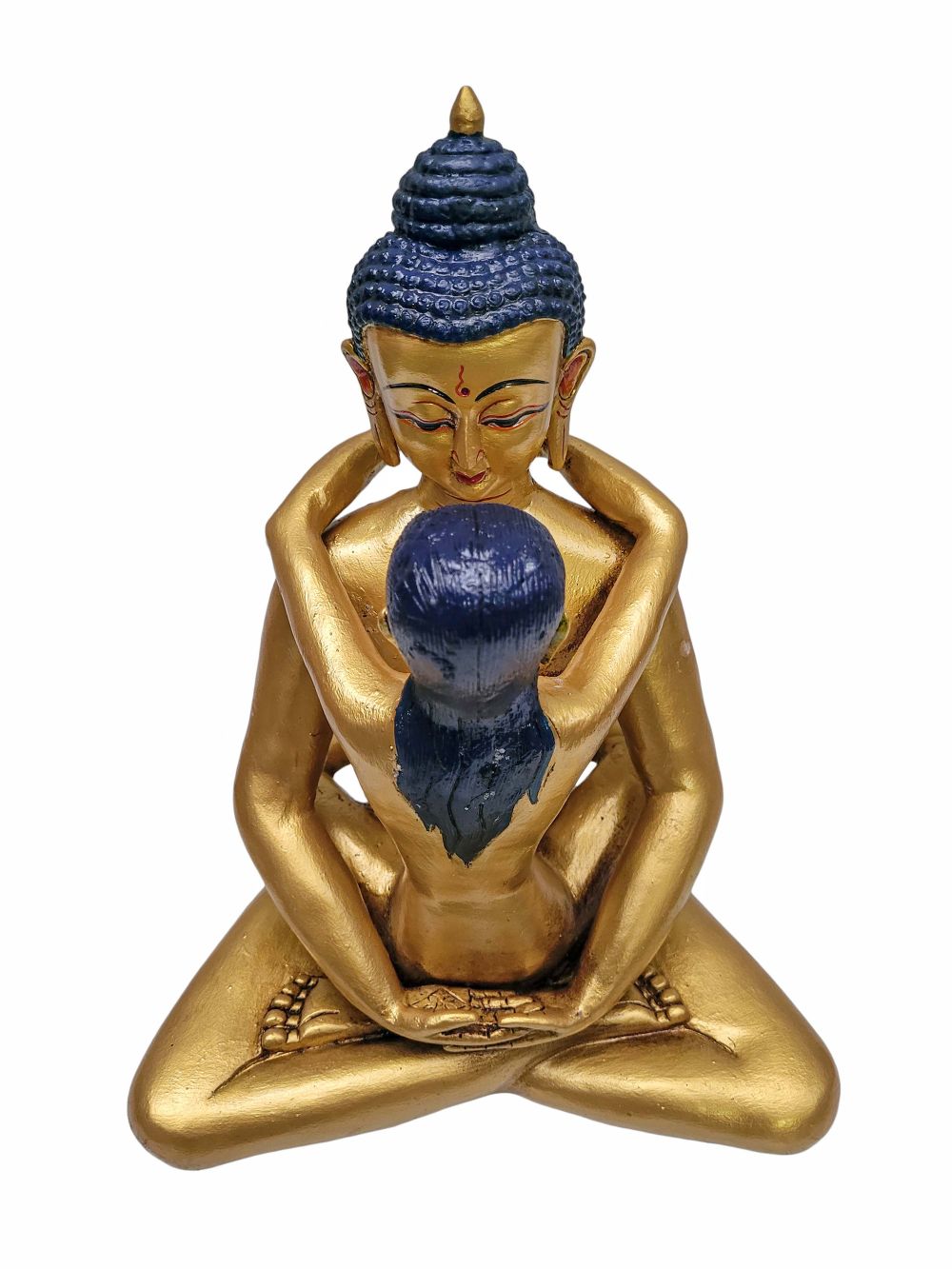
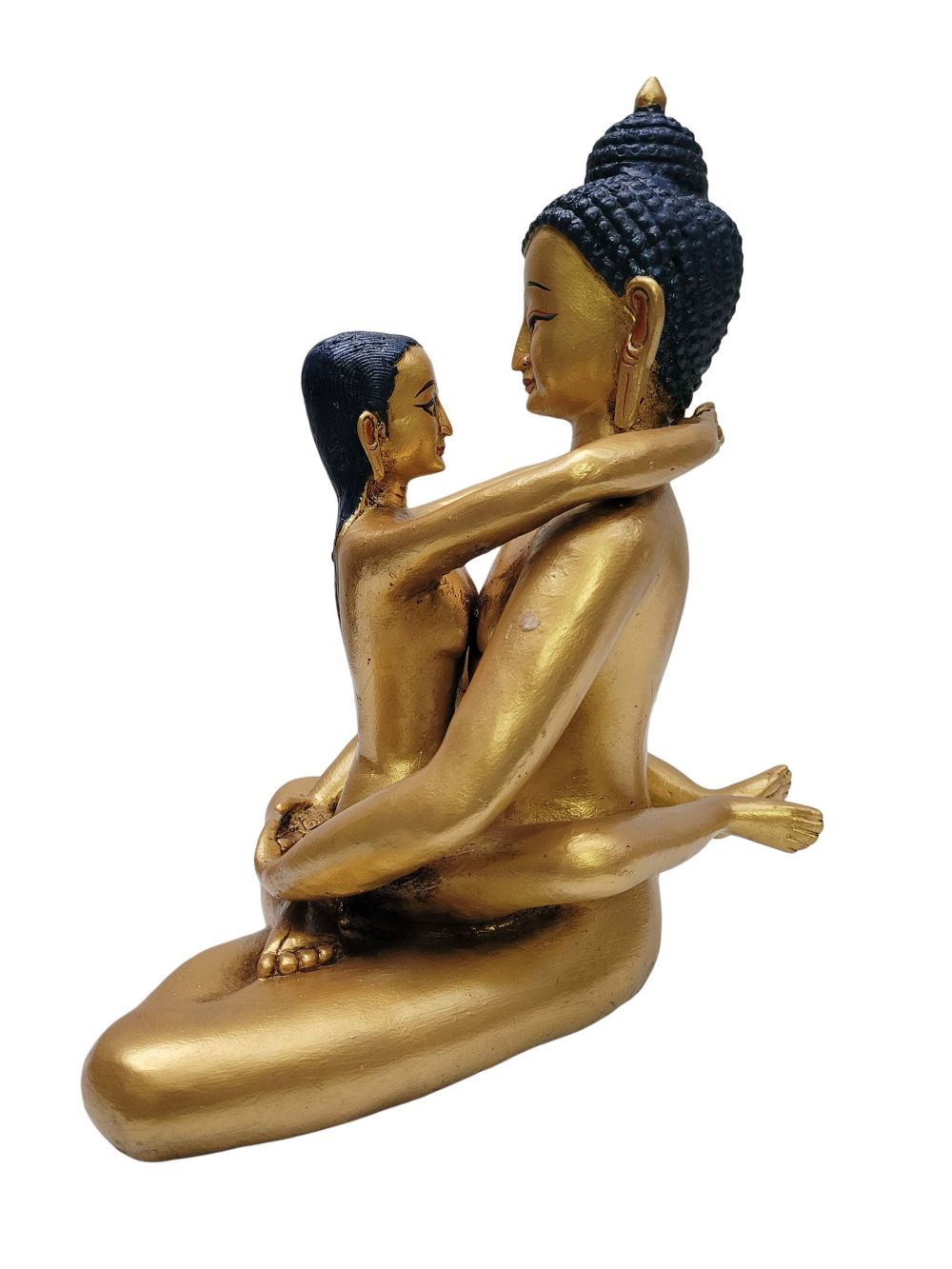
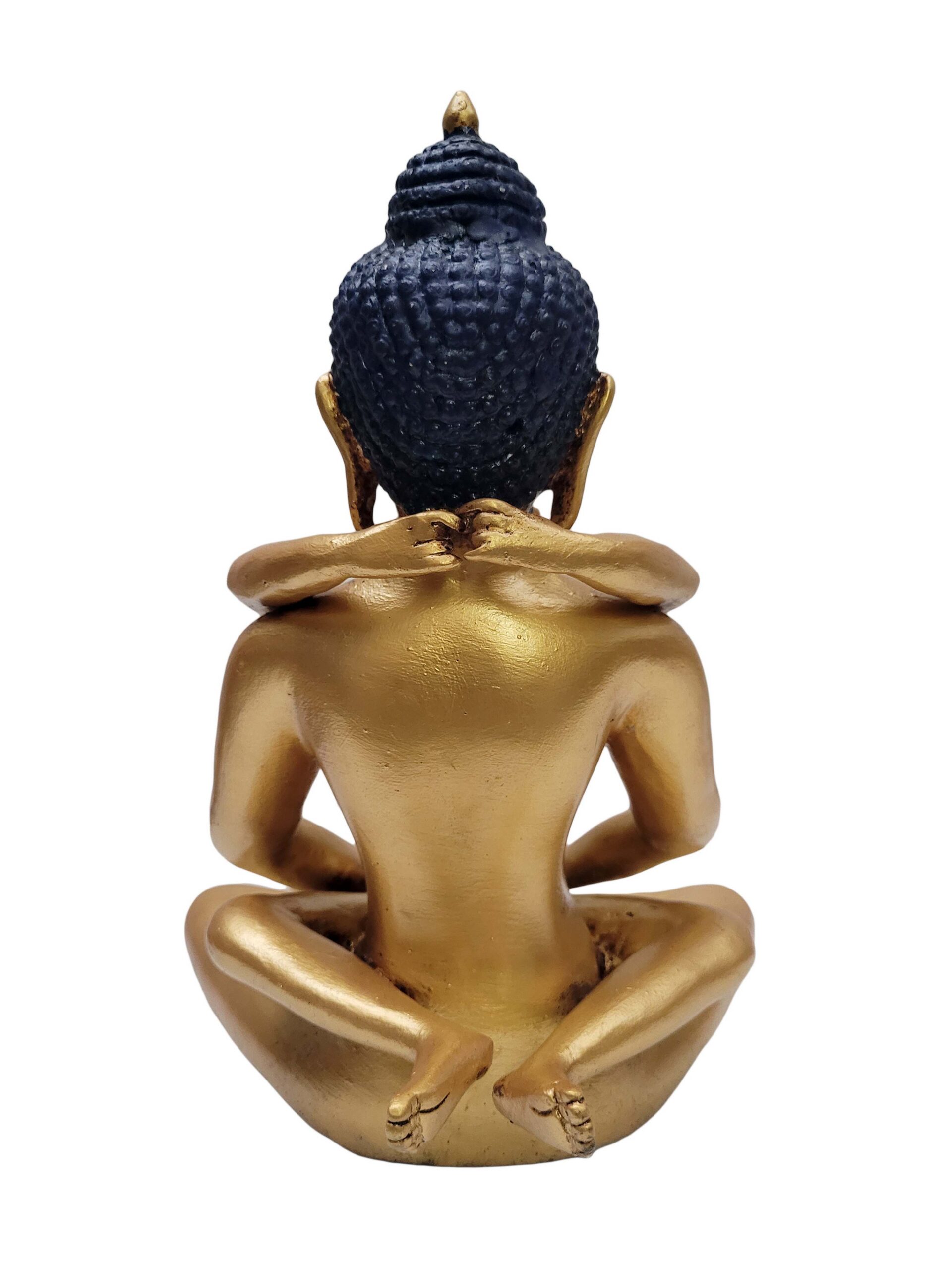


Samantabhadra Statue | Handmade Copper | Gold-Painted Face
Item Code: HME30748
Weight: 4581 grams
Size (cm): 29 x 24 x 23
Material: Copper
Availability: In Stock
About Samantabhadra
Samantabhadra is one of the most ancient and symbolically profound representations in Buddhist iconography. Though the form appears deceptively simple—lacking the symbolic implements seen in other deities—it carries deep spiritual significance.
At its core, the image of Samantabhadra represents the realization and flowering of pure consciousness, unbound by illusion or form. This enlightened state of being transcends duality and speaks directly to the essence of awakening.
Key Symbolic Concepts:
Awakened Self (Bodhi): Samantabhadra symbolizes the pure, original consciousness—free from delusion and deeply aware of the transient nature of material existence.
Time and Presence: The sun and moon often associated with this figure symbolize time and the human condition. From the awakened state, time merges into the eternal present, unifying past, present, and future.
Emptiness and Origin: Samantabhadra is the origin of all form, from which all existence arises and into which it dissolves, representing Sunyata—the ultimate nature of reality explored by both Madhyamaka (Śūnyavāda) and Yogacara schools.
Universal Source: In Vajrayana Buddhism, Samantabhadra is seen as the source from which all deities and Dakinis manifest. He is closely linked with the Five Dhyani Buddhas—Amitabha, Akshobhya, Amoghasiddhi, Ratnasambhava, and Vairocana.
Bodhisattva Vows: Samantabhadra is also honored in the Avatamsaka Sutra (Lotus Sutra) as the figure who made the Ten Great Vows to guide sentient beings along the Bodhisattva path.
Gold-Painted Face
The face of this Samantabhadra statue is meticulously painted with gold, emphasizing the eyes and lips to capture subtle expressions of serenity and awareness that are otherwise difficult to achieve through metal carving alone.
In Buddhist practice, this gold-painted detailing is not merely decorative—it is a sacred consecration ritual, symbolizing the spiritual life infused into the statue. It reflects the artisan’s deep reverence and devotion, transforming the figure into a vessel for meditation, ritual, and worship.
Crafted Using the Lost-Wax Technique
This statue is handcrafted using the Lost-Wax Casting Method, a revered process practiced by skilled artisans for centuries. The multi-step method ensures that each piece is both intricate and unique:
A detailed model is sculpted from wax.
The wax form is encased in layers of ceramic to form a mold.
The wax is melted away, creating a hollow cavity.
Molten copper is poured into the mold.
Once cooled, the ceramic is removed to reveal the final sculpture.
This process allows for extraordinary precision in detail and gives the statue a lifelike, enduring presence.
About Samantabhadra
Samantabhadra is one of the most ancient and symbolically profound representations in Buddhist iconography. Though the form appears deceptively simple—lacking the symbolic implements seen in other deities—it carries deep spiritual significance.
At its core, the image of Samantabhadra represents the realization and flowering of pure consciousness, unbound by illusion or form. This enlightened state of being transcends duality and speaks directly to the essence of awakening.
Key Symbolic Concepts:
Awakened Self (Bodhi): Samantabhadra symbolizes the pure, original consciousness—free from delusion and deeply aware of the transient nature of material existence.
Time and Presence: The sun and moon often associated with this figure symbolize time and the human condition. From the awakened state, time merges into the eternal present, unifying past, present, and future.
Emptiness and Origin: Samantabhadra is the origin of all form, from which all existence arises and into which it dissolves, representing Sunyata—the ultimate nature of reality explored by both Madhyamaka (Śūnyavāda) and Yogacara schools.
Universal Source: In Vajrayana Buddhism, Samantabhadra is seen as the source from which all deities and Dakinis manifest. He is closely linked with the Five Dhyani Buddhas—Amitabha, Akshobhya, Amoghasiddhi, Ratnasambhava, and Vairocana.
Bodhisattva Vows: Samantabhadra is also honored in the Avatamsaka Sutra (Lotus Sutra) as the figure who made the Ten Great Vows to guide sentient beings along the Bodhisattva path.
Gold-Painted Face
The face of this Samantabhadra statue is meticulously painted with gold, emphasizing the eyes and lips to capture subtle expressions of serenity and awareness that are otherwise difficult to achieve through metal carving alone.
In Buddhist practice, this gold-painted detailing is not merely decorative—it is a sacred consecration ritual, symbolizing the spiritual life infused into the statue. It reflects the artisan’s deep reverence and devotion, transforming the figure into a vessel for meditation, ritual, and worship.
Crafted Using the Lost-Wax Technique
This statue is handcrafted using the Lost-Wax Casting Method, a revered process practiced by skilled artisans for centuries. The multi-step method ensures that each piece is both intricate and unique:
A detailed model is sculpted from wax.
The wax form is encased in layers of ceramic to form a mold.
The wax is melted away, creating a hollow cavity.
Molten copper is poured into the mold.
Once cooled, the ceramic is removed to reveal the final sculpture.
This process allows for extraordinary precision in detail and gives the statue a lifelike, enduring presence.