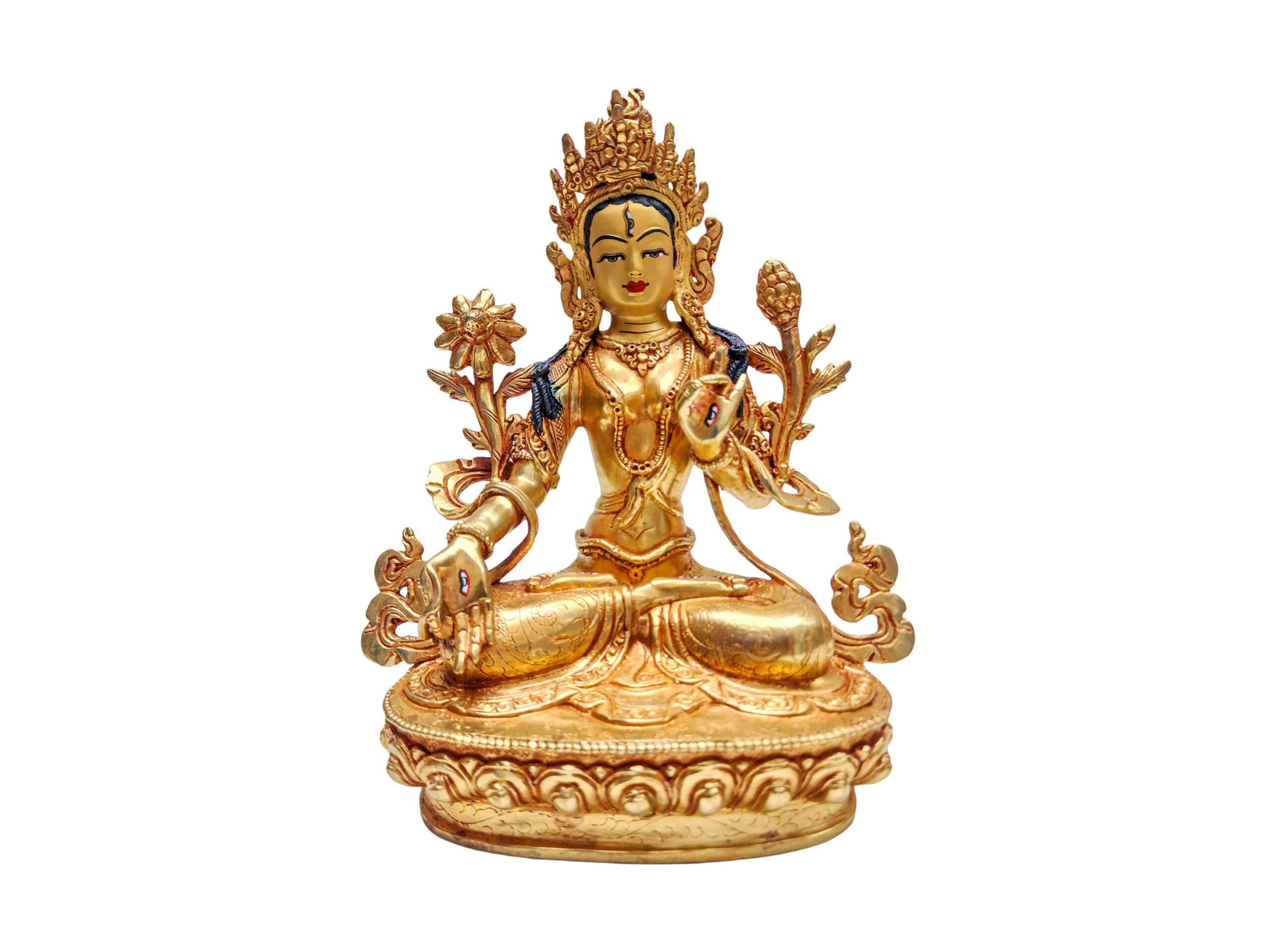
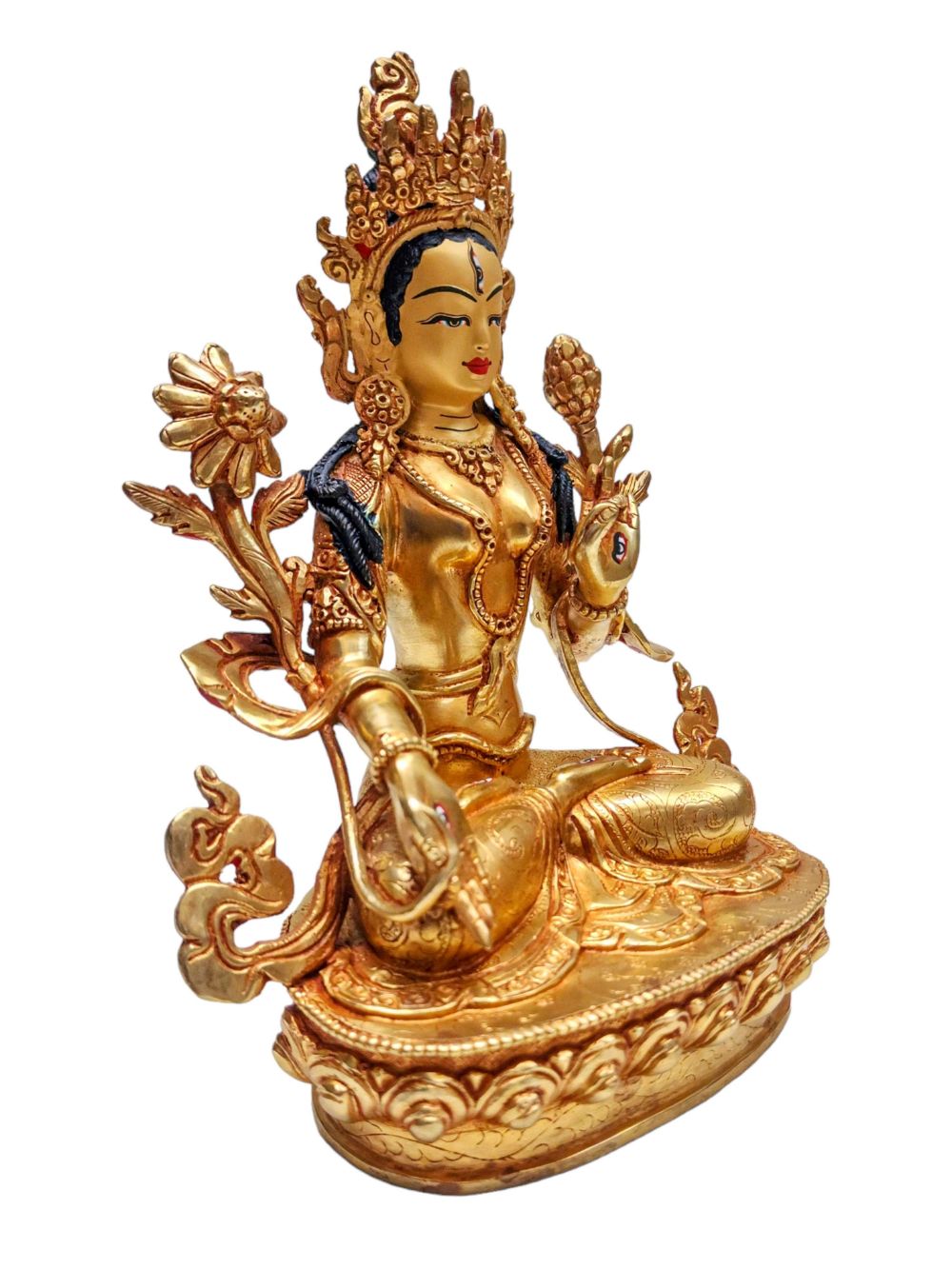
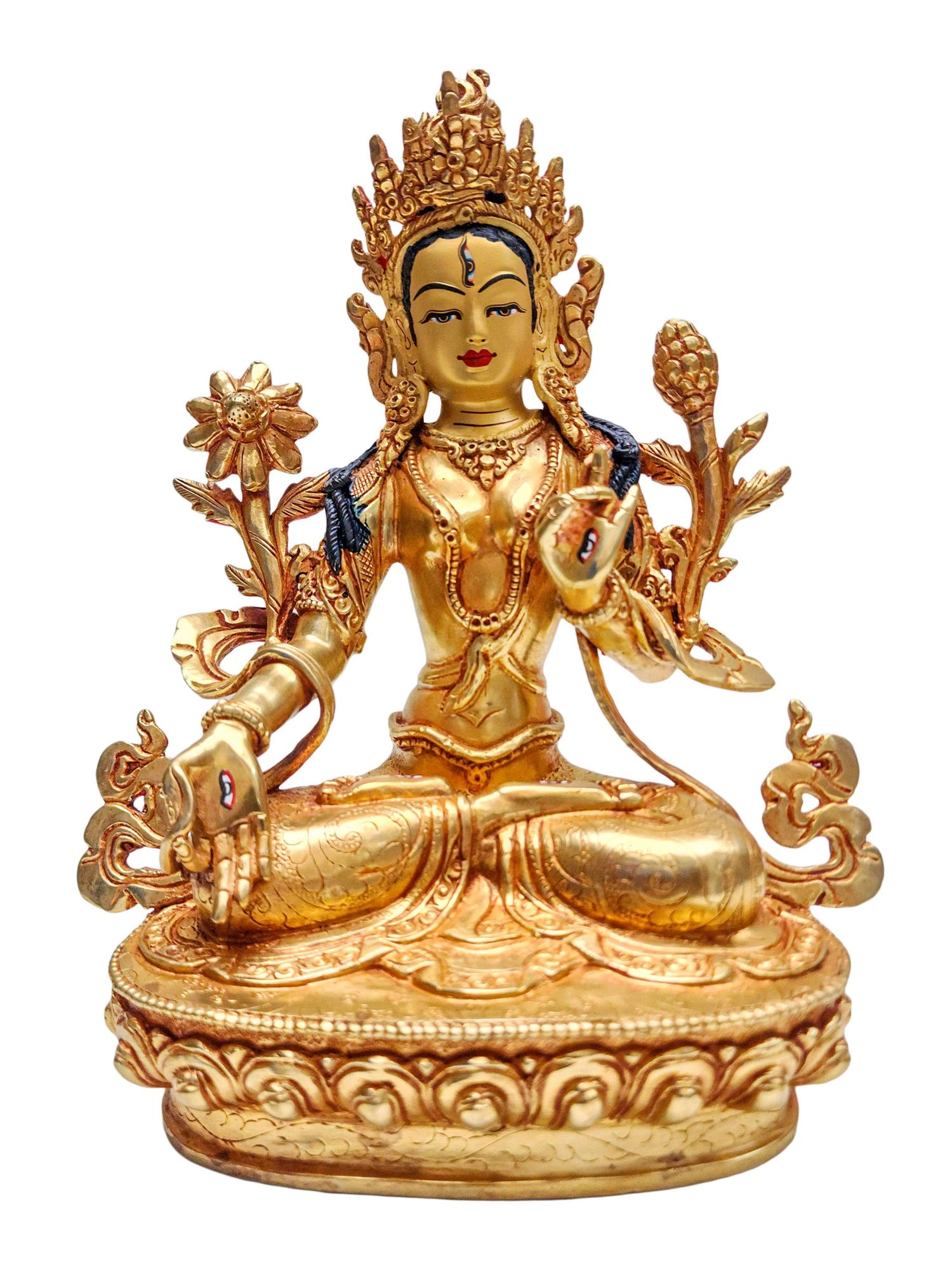
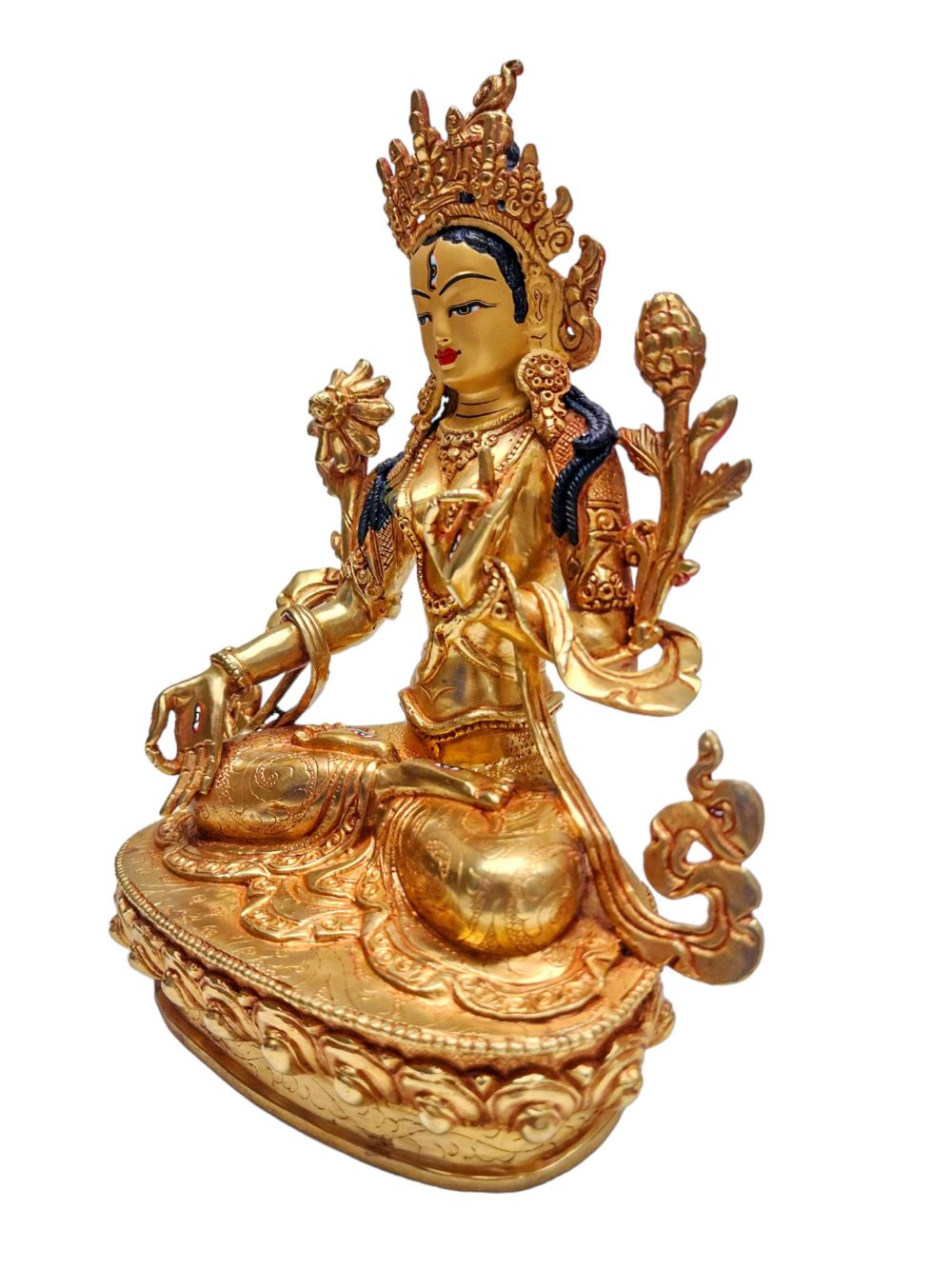
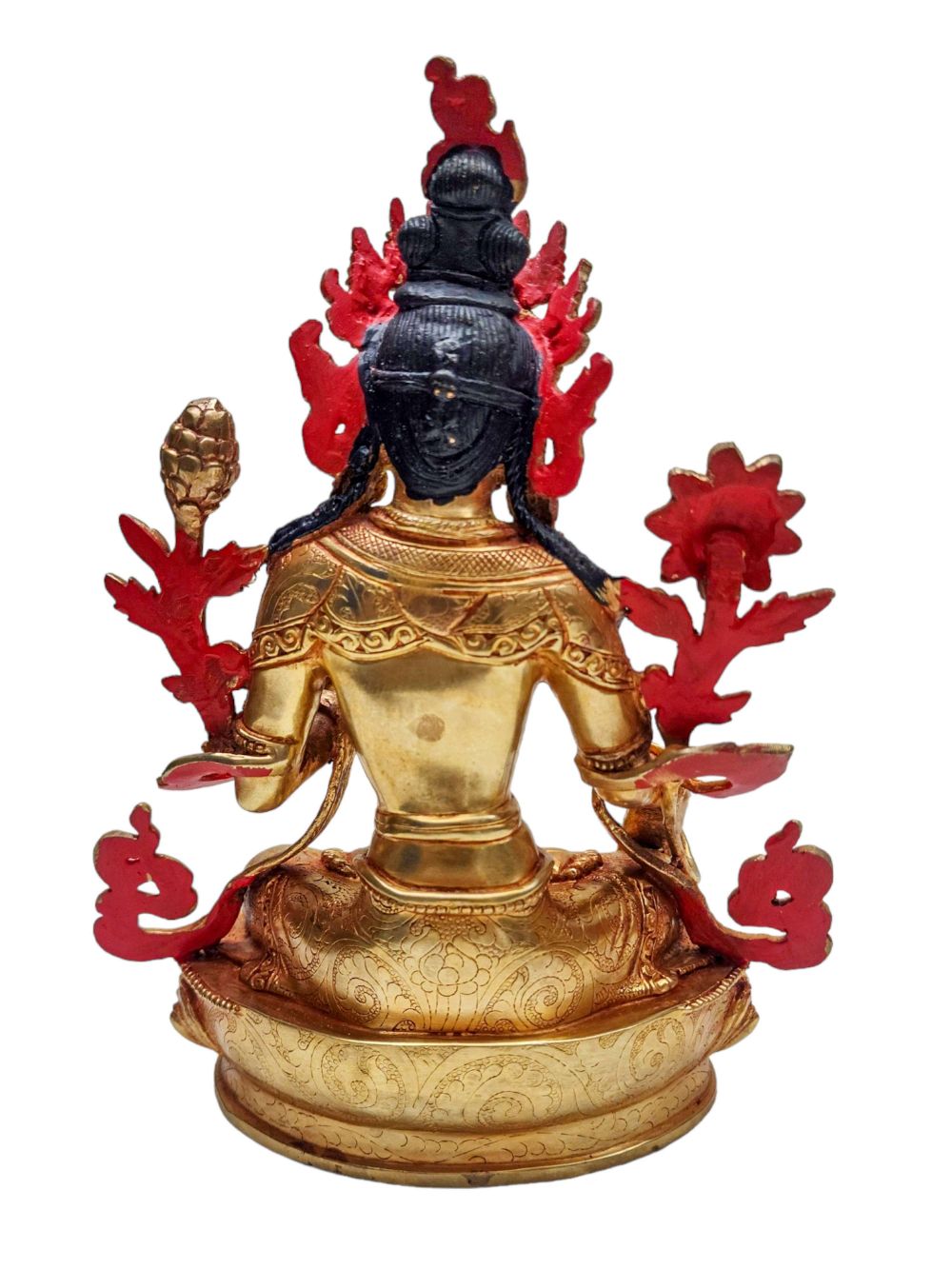


White Tara Statue | Buddhist Handmade | Gold Plated with Painted Face
Item Code: HME30782
Weight: 1683 grams
Size (cm): 23 x 19 x 10
Material: Copper
Availability: Available
About White Tara
White Tara is one of the most beloved and revered goddesses in the Buddhist pantheon. She symbolizes compassion, longevity, healing, and serenity. Often portrayed with a gentle, peaceful expression and a white complexion, she radiates loving-kindness and protective energy.
White Tara embodies the Four Immeasurables—Loving Kindness, Compassion, Sympathetic Joy, and Equanimity—making her a central figure in meditative and devotional practices. Her presence is believed to foster peace, balance, and positive transformation across time—past, present, and future.
As a deity of long life, she is invoked for protection against physical and spiritual harm and for blessings of health and longevity. Her seven eyes—located on her face, palms, and soles—represent her all-seeing compassion and vigilance in alleviating suffering.
Gold Painted Face
The face of White Tara is carefully hand-painted with gold to emphasize her sacred expression, particularly the eyes and lips. These features play a crucial role in conveying the statue’s compassionate and serene presence, which cannot be fully captured by metalwork alone.
In traditional Buddhist practice, painting the face is a symbolic act of consecration—infusing the statue with life and spiritual energy. The application of gold reflects both ritual significance and artistic excellence, honoring the deity and elevating the spiritual impact of the piece. This step reflects the artisan’s devotion and the intention to make the statue worthy of sacred space and practice.
Traditional Full Fire Gold Plating
This statue is finished using the traditional fire gold plating technique, also known as mercury gilding. This ancient Nepali method involves applying a real gold amalgam to the surface, which is then heat-treated to bond the gold permanently to the metal.
Fire gold plating is more durable, authentic, and aesthetically rich than modern electroplating. Though more labor-intensive and costly, it is cherished for its timeless beauty and cultural heritage, making each piece not only an artwork but a legacy of spiritual craftsmanship.
Lost-Wax Casting Process
The White Tara statue is created using the lost-wax casting method—a traditional and precise sculpting technique practiced for centuries in Nepal.
A detailed wax model of the statue is first sculpted by hand.
Layers of ceramic are applied to form a mold around the wax.
Once hardened, the wax is melted and drained out, leaving a mold cavity.
Molten copper is poured into this cavity.
After cooling, the ceramic shell is broken away to reveal the final metal statue.
This process allows for intricate detail and individual character, ensuring that each statue is unique and spiritually powerful, reflecting the skill and dedication of the artisan.